Golden Triangle Spiritual Retreat
About Tour :
What to Expect on Your Journey
Embark on a journey designed for comfort, discovery, and deep connection. We handle the logistics so you can focus on the experience. Here is what defines our tours:
Authentic Cultural Immersion: Go beyond the guidebook with experiences that connect you to the true heart of India’s traditions and daily life.
Expert Licensed Guides: Explore with confidence alongside professional, English-speaking guides who provide deep historical insight and local recommendations.
Premium Transportation: Travel in safety and style with our fleet of modern, air-conditioned vehicles and experienced private drivers.
Fully Customizable Itineraries: Your trip, your rules. We offer flexible options to tailor the pace and activities to your specific interests.
Unforgettable Connections: Whether traveling solo or in a group, expect memorable adventures and the chance to connect with fellow seekers and travelers.
Day 1: The Threshold of Indraprastha – Arrival and Immersion
The opening of the itinerary must immediately distinguish itself from standard “Arrival in Delhi” descriptions. Delhi is presented not merely as a transit hub but as Indraprastha, the ancient capital of the Mahabharata, setting a mythological tone from the outset.
Accommodation Strategy: The itinerary suggests The Leela Palace or The Taj Mahal Hotel. These choices are strategic. The Leela represents modern Indian opulence, while The Taj Mahal Hotel (on Mansingh Road) offers proximity to the spiritual center of the city and historical continuity. Mentioning these specific properties helps rank for “luxury hotels in Delhi” queries combined with tour packages.
Narrative Expansion: The Revival of the Yamuna Aarti
The Gap: Standard itineraries often neglect the Yamuna River’s spiritual status in Delhi due to pollution concerns, focusing instead on Varanasi. The Insight: Recent government initiatives have revitalized Vasudev Ghat near Kashmere Gate/Civil Lines, introducing a regular “Yamuna Aarti” to mirror the famous Ganga Aarti.
Welcome to Delhi, a city where time is not linear but cyclical, echoing the ancient rhythms of Indraprastha. Upon arrival at the Indira Gandhi International Airport, a private chauffeur will facilitate a seamless transfer to your sanctuary of choice—perhaps the palatial splendors of The Leela Palace or the historic elegance of The Taj Mahal Hotel. As the city’s chaotic energy swirls outside, these retreats offer the first taste of Indian hospitality (Atithi Devo Bhava—The Guest is God).
The spiritual journey commences at dusk, not in a temple, but at the banks of the Yamuna River. Unlike the frenetic energy of commercial tourist spots, we proceed to the newly renovated Vasudev Ghat near Civil Lines. Here, the city has reclaimed its spiritual connection to the river, the sister of Yama (the Lord of Death) and the beloved of Krishna.
The Ritual of Yamuna Aarti: As the sun dips below the horizon, the Yamuna Aarti begins. This is not merely a performance but a ritual invocation. Priests, clad in traditional saffron attire, wield large brass lamps (diyas) filled with ghee. The rhythmic chanting of mantras, the clangor of bells, and the scent of camphor purify the atmosphere. The Vasudev Ghat, landscaped in the classic Charbagh style and adorned with a massive 250kg bell sourced from Rajasthani craftsmen, offers a serene environment for your first meditation. This experience grounds the traveler, washing away the fatigue of the journey and setting a reverent tone for the days to follow. It is a rare opportunity to witness a burgeoning tradition that seeks to restore the sanctity of Delhi’s lifeline.
Day 2: The Architecture of Faith – Delhi’s Spiritual Tapestry
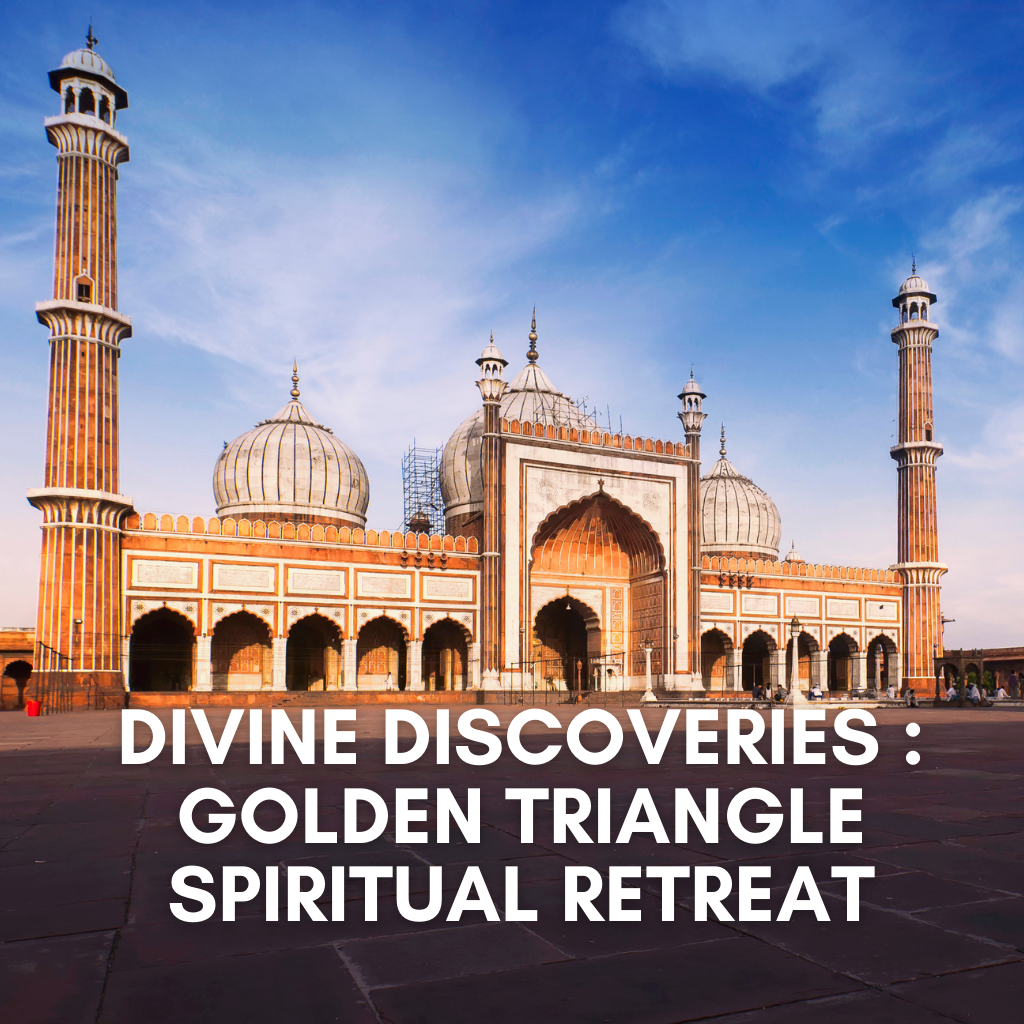
Delhi is a palimpsest of religions. Day 2 is structured to showcase this pluralism, moving from the silence of the Bahá’í faith to the seva (service) of Sikhism and the grandeur of Hindu architecture.
Morning: The Sound of Silence at the Lotus Temple The day begins with a visit to the Bahá’í House of Worship, universally known as the Lotus Temple. Designed by Fariborz Sahba, this architectural marvel is composed of 27 free-standing marble-clad “petals” arranged in clusters of three to form nine sides.
Spiritual Insight: The Bahá’í faith prohibits ritualistic ceremonies and sermons within the temple proper. Instead, the focus is on the absolute silence of the prayer hall. This silence is profound, amplified by the unique acoustics of the dome. Visitors are invited to sit in the pews and meditate on the oneness of God, the oneness of religion, and the oneness of humanity.
Logistics: The temple opens at 9:00 AM (closed Mondays). Arriving early is crucial to experience the sanctuary before the midday crowds.
Mid-Day: The Spirit of Service at Gurudwara Bangla Sahib From the silence of the Lotus, we transition to the vibrant devotion of Gurudwara Bangla Sahib. Associated with the eighth Sikh Guru, Guru Har Krishan, this site was once a bungalow (haveli) where the Guru served water to those suffering from a smallpox epidemic.
The Sarovar: The central tank (Sarovar) is believed to contain healing waters (Amrit). Watching devotees take a holy dip is a moving testament to faith.
The Langar: The true spiritual heart of this complex is the Langar (community kitchen). Here, the concept of Seva (selfless service) comes alive. Regardless of caste, creed, or social standing, thousands sit together on the floor to share a vegetarian meal. Participating in the kitchen—rolling dough or serving lentils—is a humbling act that connects the traveler to the core Sikh value of equality.
Lunch: A vegetarian lunch is recommended at a nearby establishment, perhaps savoring the rich flavors of North Indian cuisine at a reputable restaurant like Sattvik or Saravana Bhavan, keeping the diet consistent with the day’s spiritual theme.
Afternoon: The Stone Cosmos of Akshardham The afternoon is dedicated to Swaminarayan Akshardham, a sprawling temple complex that is a modern masterpiece of traditional Hindu architecture. Built from pink Rajasthani sandstone and Italian Carrara marble, it was constructed without the use of structural steel, relying on ancient interlocking principles.
Sahajanand Darshan (Hall of Values): We explore the Hall of Values, where animatronics and dioramas depict the life of Swaminarayan and teach universal values such as non-violence and family harmony.
Sanskruti Vihar: A 12-minute boat ride takes visitors through 10,000 years of Indian history, showcasing contributions in mathematics (Aryabhata), medicine (Sushruta), and astronomy, reinforcing the “Golden Triangle” theme of ancient wisdom.
The Mandir: The main shrine, with its intricately carved Mandovar (external wall) featuring 20,000 statues of deities and sages, is a visual encyclopedia of Hindu spirituality.
The Water Show: If time permits, the Sahaj Anand water show at the Yagnapurush Kund (stepwell) uses water, light, and sound to narrate a story from the Kena Upanishad, blending technology with Vedantic philosophy. Note: Electronics are not allowed inside; this digital detox enhances the immersion.
Evening: Yoga and Integration The day concludes with a private Yoga Nidra or restorative yoga session at a wellness center or the hotel spa. This practice helps integrate the diverse energies encountered throughout the day—from Bahá’í silence to Sikh service and Hindu grandeur.
Day 3: The Journey to the Throne of God – Delhi to Agra
The transit from Delhi to Agra is often treated as a mere commute. However, for a spiritual tour, it is a pilgrimage to the city of the Taj Mahal, viewed here through the lens of Sufi mysticism rather than just romance.
Route: The Yamuna Expressway connects Delhi and Agra (approx. 210 km / 3-4 hours). Transport: A luxury vehicle (Toyota Innova Crysta/Mercedes) ensures a smooth journey. Accommodation: The Oberoi Amarvilas is the premier choice. Its unique positioning allows every room to face the Taj Mahal, extending the spiritual viewing experience (“Darshan”) into the private sphere.
Narrative Expansion: The Taj Mahal as Sufi Architecture
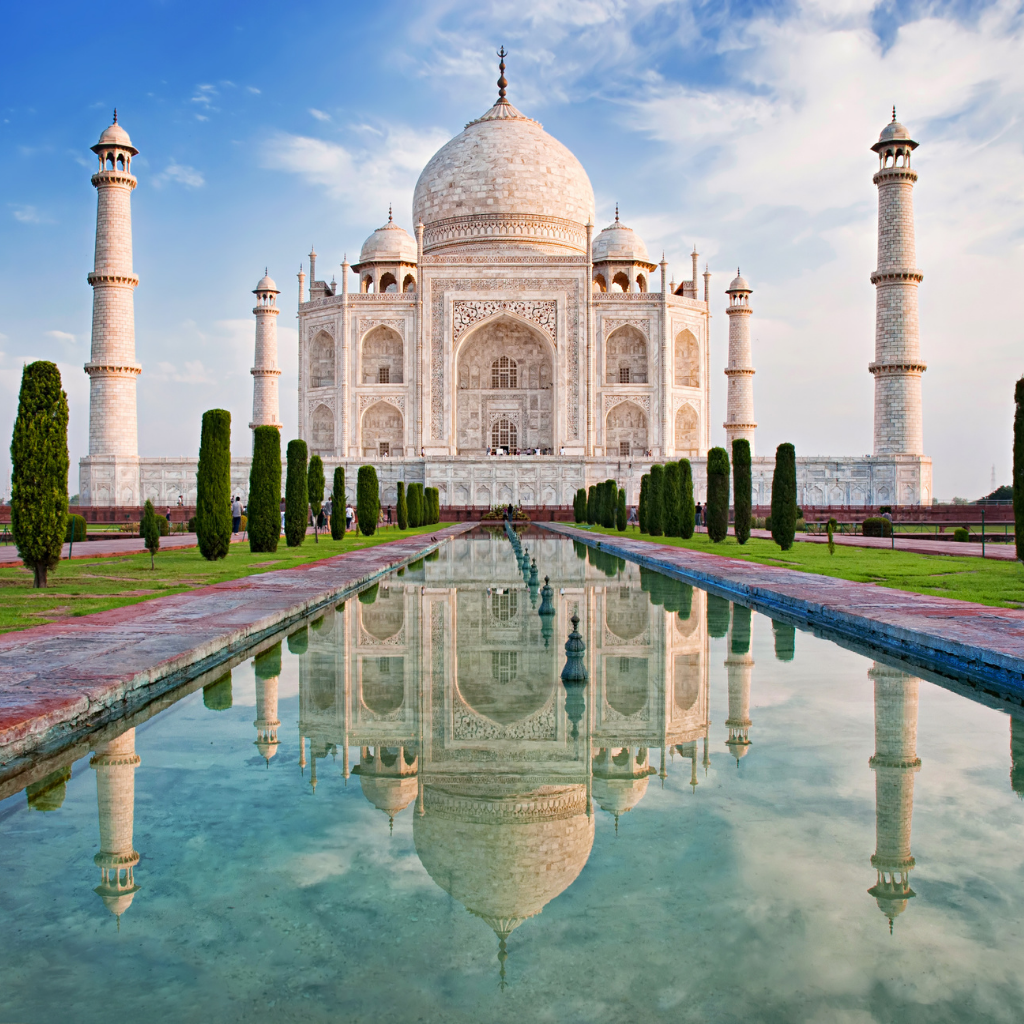
Upon arrival in Agra, the focus shifts to the Taj Mahal(Golden Triangle Spiritual Retreat). While popular culture celebrates it as a monument to love, scholars and spiritual seekers recognize it as a physical representation of the Divine Throne and the Gardens of Paradise (Jannat) as described in the Quran.
The Architecture of the Afterlife:
The Charbagh: The garden layout, divided into four quadrants by water channels, represents the four rivers of Paradise (water, milk, wine, and honey).
The Calligraphy: The inscriptions on the Great Gate invite the “soul at peace” to enter the garden of the Lord. As one approaches the main mausoleum, the size of the Quranic calligraphy increases to create an optical illusion of uniformity—a metaphor for the equality of all souls before the Divine.
Symmetry and Unity: The complex’s perfect bilateral symmetry reflects Tawhid (the Oneness of God). The only asymmetrical element is the grave of Shah Jahan himself, placed later next to Mumtaz Mahal(Golden Triangle Spiritual Retreat), signifying the intrusion of human mortality into divine perfection.
Lunch: A meal with a view is essential. Recommendations include the restaurant at The Oberoi Amarvilas or a reputable local venue like Pinch of Spice or Chokho Jeeman for authentic Mughlai cuisine.
Evening: Reflection at Mehtab Bagh Across the river lies Mehtab Bagh (The Moonlight Garden). Originally designed as a viewing point for the emperor, it offers a serene, crowd-free perspective of the Taj Mahal at sunset.
Meditation: Sitting here, watching the marble monument change color with the fading light, offers a moment for guided meditation. The river Yamuna flows between the viewer and the monument, symbolizing the river of life that separates the mortal from the eternal. This view aligns with the original architectural intent—to see the Taj reflected in the water, a shimmering mirage of the spiritual realm.
Day 4: The Path of Seekers – Agra to Jaipur via Fatehpur Sikri and Abhaneri
Gap Analysis & Resolution: The original request left Day 4 blank (“Agra – Jaipur (By Road, 4-5 hours)”). This is a critical omission. The route between Agra and Jaipur contains two of North India’s(Golden Triangle Spiritual Retreat) most significant spiritual and historical sites: Fatehpur Sikri and Abhaneri. Integrating these stops transforms a long drive into a rich day of exploration.
“Agra to Jaipur places to visit” and “Chand Baori Stepwell”
Queries related to the transit between Agra and Jaipur(Golden Triangle Spiritual Retreat) are high-volume. Specifically, “Chand Baori” has gained massive global interest due to its visual geometry and cinema appearances. “Fatehpur Sikri” remains a staple for history buffs. Combining these creates a comprehensive “road trip” narrative.
Morning: The Abandoned Capital of Sufism – Fatehpur Sikri Departing Agra, the first stop (approx. 1 hour/40 km) is Fatehpur Sikri. Built by Emperor Akbar in the late 16th century, this red sandstone city was the capital of the Mughal Empire for a brief, glorious period before being abandoned due to water scarcity.
The Dargah of Salim Chishti: The spiritual core of this ghost city is the white marble tomb of the Sufi saint, Sheikh Salim Chishti. Legend holds that Akbar walked barefoot to this site to pray for a male heir, a prayer answered with the birth of Jahangir. Today, the tomb is a pilgrimage site for people of all faiths who tie crimson threads (kalawa) to the intricate marble lattice screens (jalis), seeking the saint’s blessings for children and worldly troubles.
The Buland Darwaza: We enter through the Buland Darwaza (Gate of Victory), the highest gateway in the world. The inscription on this Islamic monument ironically quotes Jesus Christ: “The world is a bridge, pass over it, but build no houses upon it. He who hopes for an hour may hope for eternity.” This underscores the syncretic and pluralistic spiritual atmosphere that defined Akbar’s court.
Mid-Day: The Geometry of Water – Abhaneri and Chand Baori Continuing west towards Jaipur (approx. 2 hours from Fatehpur Sikri), we detour to the village of Abhaneri to witness Chand Baori, a marvel of ancient Indian engineering and spirituality.
Chand Baori Stepwell: Built in the 8th-9th century by King Chanda of the Nikumbha dynasty, this is one of the deepest and largest stepwells in India. It consists of 3,500 narrow steps arranged in perfect symmetry, descending 13 stories (approx. 30 meters) into the earth.
Spiritual Significance: In the arid landscape of Rajasthan(Golden Triangle Spiritual Retreat), water is divinity. The stepwell was not just a utility but a subterranean temple. The interplay of light and shadow on the geometric steps creates a mesmerizing, meditative visual rhythm. It represents the descent into the self to find the “water” of life.
Harshat Mata Temple: Directly adjacent to the stepwell stands the Harshat Mata Temple, dedicated to the Goddess of Joy and Happiness. Although partially ruined by invasions (notably by Mahmud of Ghazni), the temple’s remnants display exquisite craftsmanship from the Gurjara-Pratihara era.
The Deity: Harshat Mata is believed to spread Abha (brightness/joy) to the village, hence the name Abhaneri (City of Brightness). Worshipping here is said to grant clarity and joy. The sculptures depict scenes of music, dance, and love, affirming the vibrant embrace of life characteristic of Vaishnavism.
Lunch: Organic Spirituality at Umaid Lake Palace For lunch, we stop at Umaid Lake Palace in Kalakho/Dausa, located conveniently near Abhaneri. This “Organic Retreat” grows its own produce, offering a farm-to-table experience that aligns with the wellness theme of the tour.
Menu: The restaurant serves fresh, organic Rajasthani cuisine. It is a “Sattvic-friendly” environment, perfect for a restful break amidst organic farms before the final leg of the journey.
Afternoon: Arrival in the Pink City The final drive to Jaipur takes approximately 1.5 to 2 hours.
Arrival: Check into a luxury heritage hotel such as The Rambagh Palace or Jai Mahal Palace. These converted palaces offer a living experience of Rajput hospitality.
Evening: Relax at the hotel or take a brief walk in the vibrant markets of the Pink City(Golden Triangle Spiritual Retreat) if energy permits.
Day 5: The Cosmic City – Shakti and Science in Jaipur
Jaipur is not merely a collection of forts; it is a city designed according to the Vastu Shastra (ancient Indian architecture science) and aligned with cosmic grids. Day 5 explores the dual themes of Shakti (divine feminine power) and Jyotish (Vedic astronomy).
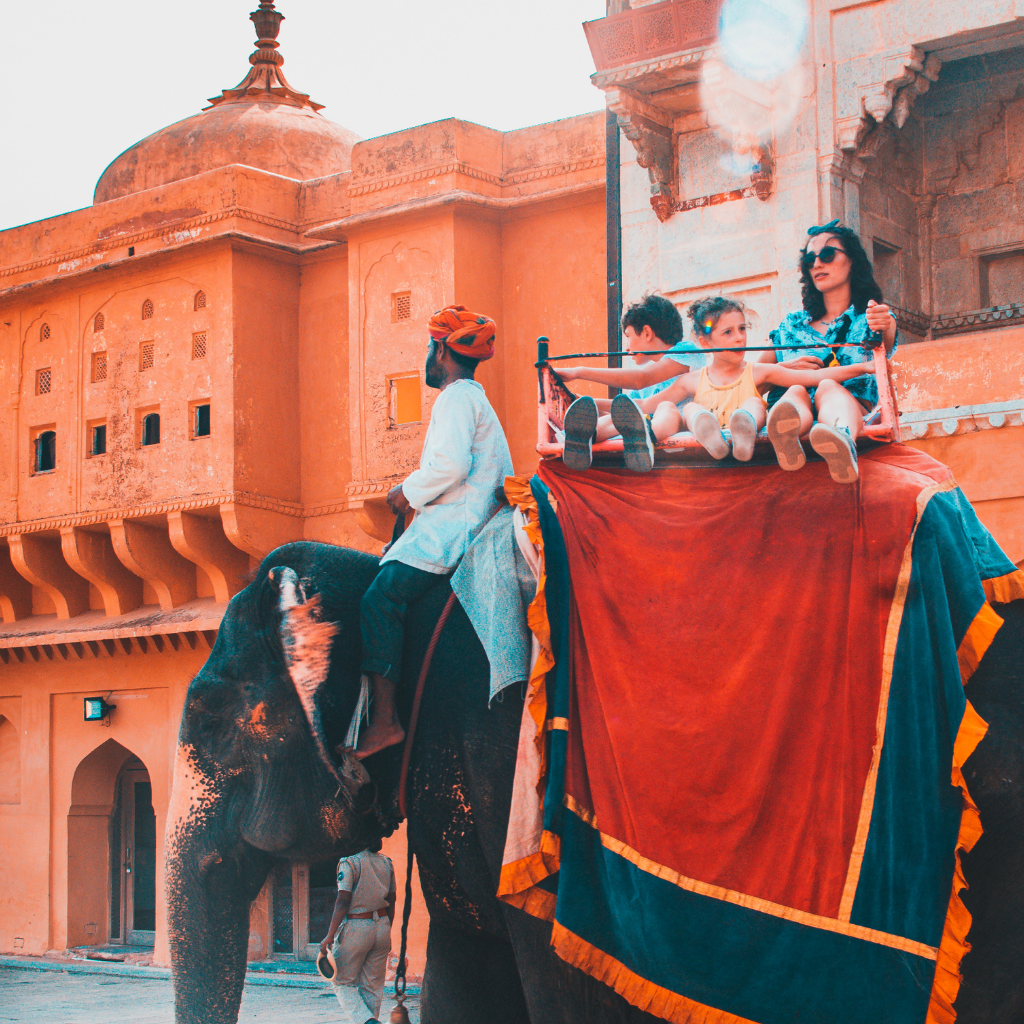
Morning: The Goddess of Victory at Amber Fort We ascend to Amber Fort (Amer Fort) early in the morning, utilizing a jeep or elephant ride to reach the hilltop ramparts. While the palace architecture is stunning, our destination is the Shila Devi Temple located within the fort’s main courtyard.
Shila Devi: The idol of the goddess (a form of Kali or Durga) was brought from Jessore (modern-day Bangladesh) by Raja Man Singh I in the 16th century following a successful military campaign. She is the Kuldevi (clan deity) of the Jaipur royal family.
The Ritual: The temple features magnificent silver doors carved with Tantric imagery. It is believed that worshipping here grants strength and victory over internal and external obstacles. The energy here is fierce and protective. We time our visit to coincide with the morning Aarti, witnessing the fervor of local devotion.
Architecture: The fort itself is a fusion of Rajput and Mughal styles, with the Sheesh Mahal (Mirror Palace) reflecting the idea that a single light (divinity) can be reflected in a thousand mirrors (souls).
Mid-Day: Reading the Mind of God at Jantar Mantar We descend to the city to visit Jantar Mantar, a UNESCO World Heritage site. Far from being a mere collection of odd sculptures, this is the largest stone astronomical observatory in the world, built by the scholar-king Sawai Jai Singh II in the 18th century.
Vedic Astronomy: The instruments here connect the observer directly to the cosmos. The Samrat Yantra, a massive sundial 27 meters high, measures time with an accuracy of two seconds. In Indian philosophy, Kala (Time) is an aspect of the Divine.
Astrological Significance: The Rashivalaya Yantras are a set of 12 instruments, each dedicated to a specific Zodiac sign. Astrologers still use these to calculate the Panchang (Hindu almanac) and determine auspicious times (Muhurats) for rituals. This site bridges the gap between science and spirituality, demonstrating the Indian view that the cosmos is an orderly, divine manifestation.
Lunch: A traditional Rajasthani meal at a renowned restaurant like 1135 AD (inside Amber Fort) or Suvarna Mahal (at Rambagh Palace), offering a “Royal Thali” experience.
Evening: Sunset Meditation at Nahargarh Fort As the day cools, we drive up to Nahargarh Fort, perched on the edge of the Aravalli hills overlooking the city.
The View: From here, the geometric grid of Jaipur—modeled on the nine-square Mandala of the universe—is clearly visible.
Meditation: We find a quiet bastion to watch the sunset. As the city lights flicker on below, a guided meditation session focuses on the element of Fire (Agni), associated with the Rajput spirit and the setting sun.
Day 6: Return to the Source – Jaipur to Delhi
The return journey completes the triangle, bringing the traveler(Golden Triangle Spiritual Retreat) back to Delhi for a final synthesis of the tour’s spiritual lessons—Devotion (Bhakti) and History.
Route: Jaipur to Delhi (approx. 270 km / 5-6 hours). Transport: Private luxury vehicle. Stops: En route refreshment stops at luxury mid-way resorts like Neemrana Fort Palace (optional detour) or high-end highway plazas.
Narrative Expansion: Bhakti Yoga and Ancient Roots
Morning: Drive to Delhi After a leisurely breakfast, we depart Jaipur. The drive allows for reflection on the diverse spiritual landscapes traversed—from the river banks of Delhi to the Sufi shrines of Agra and the Goddess temples of Jaipur.
Afternoon: The Ecstasy of Devotion at ISKCON Delhi Upon reaching Delhi, we visit the ISKCON Temple (International Society for Krishna Consciousness) in the East of Kailash neighborhood. This temple is a modern citadel of the Bhakti Yoga tradition.
The Experience: Dedicated to Lord Krishna and Radha, the temple is vibrant with the chanting of the Maha Mantra (“Hare Krishna”). Unlike the silent meditation of the Lotus Temple, this is spirituality through sound and celebration.
Vedic Museum: The complex houses a high-tech museum that uses multimedia to explain the philosophy of the Bhagavad Gita, karma, and reincarnation. It provides an intellectual framework for the devotional practices witnessed throughout the tour.
The Atmosphere: The rhythmic beating of drums (mridangams) and the dancing devotees create a high-vibrational energy that is infectious and uplifting.
Late Afternoon: The Tower of Victory – Qutub Minar The final historical stop is the Qutub Minar, a UNESCO World Heritage site. Standing 73 meters tall, this minaret was built in 1193 by Qutub-ud-din Aibak.
Spiritual Stratigraphy: The complex is a powerful visual of India’s layered history. The Quwwat-ul-Islam Mosque at the foot of the minaret was constructed using the pillars of 27 demolished Hindu and Jain temples. The intricate carvings of bells, lotuses, and chains on the pillars are still visible, blending with the Islamic calligraphy of the arches. It is a stone testament to the churning of history and the resilience of faith.
The Iron Pillar: In the courtyard stands the famous Iron Pillar, dating back to the Gupta Empire (4th century CE). It is a metallurgical marvel that has not rusted for over 1,600 years. It symbolizes the endurance of ancient Indian knowledge.
Lunch: A vegetarian meal is taken en route or upon arrival in Delhi, perhaps at Govinda’s inside the ISKCON complex, known for its pure, sanctified food (Prasadam).
Overnight: Return to the hotel in Delhi (The Leela/The Taj) for the final night.
Day 7: The Final Offering – Departure
The final day is structured to be relaxing, ensuring the traveler leaves India not exhausted, but rejuvenated.
Narrative Expansion: Sacred Souvenirs
Morning: Yoga and Shopping The day begins with a final yoga session, solidifying the physical and mental relaxation achieved over the week. Following breakfast, we engage in mindful shopping for spiritual artifacts.
Khan Market / Dilli Haat: These locations offer high-quality handicrafts. Travelers can look for Rudraksha beads (sacred seeds used for meditation), sandalwood incense, bronze idols of deities like Ganesha (the remover of obstacles), and Tibetan singing bowls.
Literature: A visit to a bookstore to pick up copies of the Bhagavad Gita or Sufi poetry books serves as a lasting connection to the wisdom encountered on the trip.
Departure: A private luxury transfer conveys guests to the Indira Gandhi International Airport. As the plane ascends, the view of the sprawling city offers a final moment to reflect on the journey—a triangulation of the soul across three cities, three faiths, and countless moments of grace.